10 Engineering Doctoral Honorees Recognized This Semester
The Doctor of Philosophy (Ph.D.) degree is granted in recognition of high achievement in scholarship and the ability to apply engineering fundamentals to complex technical problems. Doctoral students complete a broad program of study, pass all prescribed examinations, and submit an innovative, high-quality applied engineering dissertation.
“We are pleased to award these degrees to these deserving students,” said Program Director Chandra Kothapalli, Ph.D. For program details, contact Dr. Kothapalli at c.kothapalli@csuohio.edu or 216.687.2562, or visit the Doctor of Philosophy in Engineering program website to learn about Ph.D. specializations.
“We are always proud of our doctoral graduates, and this group is no exception. They have demonstrated a commitment to excelling in the classroom, taking on leadership responsibilities and going the extra mile to solve highly technical problems. I am confident their Ph.D. degrees will be keys they use to open exciting career opportunities,” said Brian Davis, Ph.D., Associate Dean of Research and Graduate Affairs, Washkewicz College of Engineering.
The Honorees
Dr. Najem Alarwan
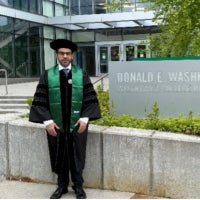
Degree: Doctor of Philosophy in Engineering, Chemical and Biomechanical Engineering
Research: Development and characterization of membranes for biomedical and electrochemical applications. Dr. Alarwan developed and modified a membrane for one-step exosome isolation directly from cell culture media without pre-treatment, achieving high yield and purity. He also synthesized and modified a highly selective, chemically stable, and cost-effective proton exchange membrane for vanadium redox flow battery applications.
Future Plans: Dr. Alarwan will pursue a career in academia and has secured a position as an Assistant Professor in the Department of Chemical Engineering at Imam Mohammad Ibn Saud Islamic University in Riyadh, Saudi Arabia.
Personal Commentary on the Engineering Doctoral Program: The Engineering Doctoral Program immersed Dr. Alarwan in a research-intensive environment that enhanced both his technical expertise and critical thinking skills. Through the program, he learned how to solve advanced problems in chemical engineering, gained a strong understanding of research principles, and developed essential skills in scientific writing and publishing. He is especially grateful for the guidance and support of his advisor, Dr. Metin Uz, whose mentorship greatly influenced his academic and research development.
Dr. Amit Choudhari
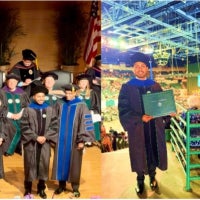
Degree: Doctor of Philosophy in Engineering, Mechanical Engineering
Research: Dr. Choudhari’s doctoral research focused on advanced metal additive manufacturing (3D printing) of high-performance tool steels using binder jetting, powder bed fusion, and directed energy deposition technologies. His work aimed to enable lightweight, high-performance, geometrically complex cutting tools with customized geometries and optimized cutting-edge designs. The research explored how manufacturing conditions influence the internal structure, durability, and performance of engineered materials, with a major focus on next-generation cutting and tooling systems for advanced manufacturing, aerospace, and precision tooling industries.
Future Plans: Dr. Choudhari plans to continue working in additive manufacturing and advanced materials research, with a focus on integrating materials science, data-driven engineering, and artificial intelligence to improve manufacturing processes and material performance. Long term, he remains committed to research and development, including work with national laboratories and advanced manufacturing industries.
Personal Commentary on the Engineering Doctoral Program: The Engineering Doctoral Program gave Dr. Choudhari the opportunity to conduct interdisciplinary research while developing technical and problem-solving skills. Collaboration with researchers, industry professionals, and faculty from diverse backgrounds strengthened his understanding of advanced manufacturing and materials engineering and helped prepare him to contribute to real-world manufacturing challenges.
Dr. Satyavan Digole
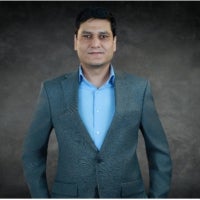
Degree: Doctor of Philosophy in Engineering, Mechanical Engineering
Research: Dr. Digole’s doctoral research focused on the design, processing, and characterization of advanced titanium-based metal matrix composites fabricated using powder metallurgy and additive manufacturing techniques, including Spark Plasma Sintering, Hot Isostatic Pressing, and Laser Powder Bed Fusion. His work investigated processing-microstructure-property relationships of boron nitride-reinforced titanium metal matrix composites for biomedical, aerospace, energy, and space applications. The research demonstrated that controlled boron nitride reinforcement and advanced manufacturing approaches can enhance microstructural refinement, mechanical strength, hardness, wear resistance, corrosion performance, and biocompatibility. The developed composites show potential for lightweight, high-temperature aerospace structures, load-bearing engineering components, biomedical implants, and future space technologies, including structural systems and radiation/neutron shielding materials.
Future Plans: Dr. Digole plans to continue working in advanced manufacturing, additive manufacturing, powder metallurgy, and materials engineering, with a focus on developing next-generation materials for aerospace, biomedical, and energy applications through research and teaching.
Personal Commentary on the Engineering Doctoral Program: The Engineering Doctoral Program at Cleveland State University provided Dr. Digole with an excellent platform to grow as both a researcher and educator. He credits the program’s interdisciplinary research opportunities, advanced characterization and manufacturing facilities, and collaborations with faculty, students, and industry partners. He is grateful to his advisor, collaborators, and the Washkewicz College of Engineering for their guidance and support throughout his doctoral journey.
Dr. Jiacheng Guo
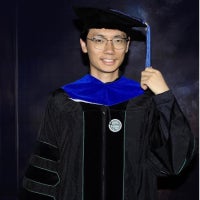
Degree: Doctor of Philosophy in Engineering, Computer Science
Research: Dr. Guo’s research areas include multi-task learning, computer vision, autonomous driving, agent AI, federated learning, large language models, transportation, intelligent transportation systems, geographical information systems, and smart cities.
Future Plans: Dr. Guo plans to continue research as a postdoctoral scholar in the Department of Civil and Environmental Engineering at the University of Wisconsin-Madison. His long-term goal is to become a university faculty member in the United States.
Personal Commentary on the Engineering Doctoral Program: Dr. Guo said he is honored to have pursued a Ph.D. in the Washkewicz College of Engineering at Cleveland State University. He credits his advisor, Dr. Tianyun Zhang, and co-advisor, Dr. Hongkai Yu, for their guidance, support, and care throughout his research journey. He also noted that the program’s qualifying examination, publication requirements, and structured milestones helped cultivate students’ foundational, professional, and research abilities.
Dr. Sanoj Kumar Karki
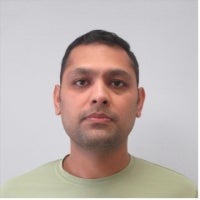
Degree: Doctor of Philosophy in Engineering, Mechanical Engineering
Research: Dr. Karki’s doctoral research focused on the development and characterization of advanced Inconel 718-based nanocomposites reinforced with carbon-based nanofillers, including graphene nanoplatelets and carbon nanotubes. His work investigated the influence of nanoscale reinforcements on microstructural evolution, densification behavior, mechanical performance, wear resistance, and corrosion properties of spark plasma sintered superalloy composites. The research integrated powder metallurgy processing, high-energy ball milling, and spark plasma sintering to fabricate high-performance materials for structural and aerospace-related applications, using advanced characterization techniques to establish structure-property relationships. His broader academic interests include data-driven materials analysis, machine learning-assisted microstructural characterization, and advanced manufacturing technologies.
Future Plans: Dr. Karki plans to pursue a career in academia and research focused on advanced materials, additive manufacturing, computational materials engineering, and multifunctional nanocomposites. His long-term goal is to contribute to research innovation and engineering education through interdisciplinary work that bridges materials science, manufacturing, and data-driven methodologies.
Personal Commentary on the Engineering Doctoral Program: The Engineering Doctoral Program at Cleveland State University was a transformative and rewarding experience for Dr. Karki, both professionally and personally. He credits the program’s strong research environment, advanced experimental facilities, mentorship, interdisciplinary exposure, collaborative atmosphere, and emphasis on practical engineering research with shaping his technical skills, critical thinking, and professional development.
Dr. Obaid Khan
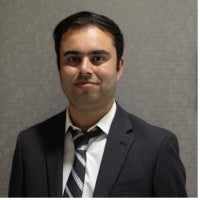
Degree: Doctor of Philosophy in Engineering, Chemical Engineering
Research: Dr. Khan’s research, “The Synthesis of Two-dimensional Silicoaluminophosphates and Zeolites: Surface Functional Group Tuning, Nanosheet Morphology Control and their Applications,” focused on developing 2D silicoaluminophosphates and MFI-type zeolites for adsorption and membrane separation. The 2D SAPOs were synthesized using amino acids anchored on the surface, altering surface properties and creating active sites for adsorption, as demonstrated through Congo red uptake. The materials were regenerated with methanol and reused for multiple cycles, and different amino acids were examined to understand how shapes and functional groups influenced mesopore formation and adsorption behavior.
Future Plans: Dr. Khan plans to begin an R&D position in industry focused on separations and advanced materials. In the near term, he intends to strengthen complementary skills such as machine learning for materials informatics and density functional theory for adsorption modeling. Longer term, his goal is to connect fundamental porous materials chemistry with scalable engineering applications in energy, water, and critical mineral recovery.
Personal Commentary on the Engineering Doctoral Program: Dr. Khan described the doctoral program at Cleveland State as one of the most formative experiences of his life, shaping him as both a person and a researcher. He credits long days in the lab, setbacks, teaching assistant experiences, and the guidance of his supervisor, Dr. Shaowei Yang, with helping him become an independent thinker. He also encourages future students to engage early with the wider research community through conferences, seminars, and conversations with researchers outside their labs.
Dr. Sambhaji Kusekar
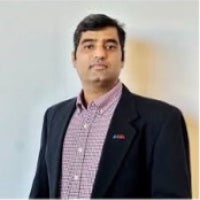
Degree: Doctor of Philosophy in Engineering
Research: Dr. Kusekar’s research focused on integrating additive manufacturing with hot forging processes for Boeing 737 applications. Conventional forging of complex parts often requires multiple preforming steps, high tooling costs, and long lead times. His work explored the use of additive manufacturing-produced preforms to reduce manufacturing steps, tooling costs, material waste, and production time. The study also investigated the effect of hot forging on the mechanical and microstructural properties of AM preforms, demonstrating the potential of combining 3D printing with forging to create new opportunities in metal manufacturing.
Future Plans: Dr. Kusekar plans to pursue a career in academia and research focused on mechanical and materials engineering education, applied research, and student mentoring. He is especially interested in teaching and research positions where he can contribute to curriculum development, hands-on learning, industry-oriented engineering education, and applied research.
Personal Commentary on the Engineering Doctoral Program: The Engineering Doctoral Program was a transformative journey for Dr. Kusekar, strengthening both his technical knowledge and personal growth. The program gave him opportunities to conduct meaningful research, collaborate with faculty and peers, and build confidence as an educator and researcher. He is grateful for the support, mentorship, and experiences that helped shape his professional career and prepare him for future challenges in engineering and academia.
Dr. Baolu Li
Degree: Doctor of Philosophy in Engineering, Computer Engineering
Dissertation: Generalization and Robustness of Vehicle-to-Everything Cooperative Perception
Dr. Surendrasingh Yogendrasingh Sonaye
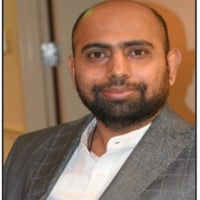
Degree: Doctor of Philosophy in Engineering, Mechanical Engineering
Research: Dr. Sonaye’s doctoral research focused on designing and developing advanced biomaterials and 3D-bioprinted structures for musculoskeletal tissue engineering. His work included electroactive and bioactive scaffolds for skeletal muscle regeneration and patient-specific implants for cranial applications. Through additive manufacturing and tissue engineering, he developed piezoelectric and composite biomaterials that improve cellular activity, tissue regeneration, and osseointegration. His research combines biomaterials, biomechanics, and bioprinting to develop regenerative solutions for traumatic injuries and tissue defects.
Future Plans: Dr. Sonaye plans to continue working in biomaterials, additive manufacturing, and regenerative medicine through industrial research and development. His goal is to contribute to next-generation medical devices, tissue-engineered constructs, and patient-specific regenerative therapies that improve clinical outcomes and quality of life for patients.
Personal Commentary on the Engineering Doctoral Program: The Engineering Doctoral Program was a significant and rewarding journey for Dr. Sonaye, helping him grow as a researcher, engineer, and person. Through interdisciplinary projects, presentations, publications, teaching, and laboratory work, he sharpened his technical, analytical, and problem-solving skills. He thanks his advisor, Dr. Prabaha Sikder, committee members, lab mates, colleagues, friends, and family for their support.
Dr. Ryhan Uddin
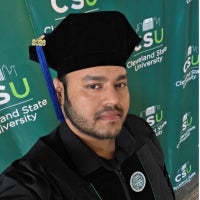
Degree: Doctor of Philosophy in Engineering, Computer Engineering
Research: Dr. Uddin’s doctoral research focused on cybersecurity, software-defined networking, federated learning, and resilient communication frameworks for LEO satellite and space-IoT networks. His dissertation, “A Resilient Federated Learning-Based SDN Framework for Secure LEO Satellite Networks,” investigated how SDN-enabled observability, machine learning, and federated learning can detect and mitigate attacks such as controller anomalies, link flooding, ICARUS, signal overshadowing, and DTN blackhole attacks in satellite and IoT environments.
Future Plans: Dr. Uddin plans to continue working at the intersection of cybersecurity, networking, cloud infrastructure, and intelligent systems. He is interested in research and industry roles where he can apply secure networked systems, system administration, cloud infrastructure, and AI-driven cybersecurity to solve real-world engineering problems.
Personal Commentary on the Engineering Doctoral Program: The Engineering Doctoral Program was a valuable and transformative experience for Dr. Uddin. It strengthened his ability to conduct independent research, solve complex technical problems, and contribute to emerging areas such as secure satellite networks, SDN, and federated learning. The program also helped him grow as a researcher and engineer through coursework, research collaboration, teaching support, lab infrastructure management, and hands-on experimentation.