Department of Computer Science
Contact
Mailing Address
Cleveland State University, Department of Computer Science
2121 Euclid Ave., FH 212
Cleveland, Ohio 44115-2214
Campus Location
Fenn Hall Room 212
1960 East 24th Street
Phone: 216.687.4604
cs@csuohio.edu
PhD in Engineering - Applied Data Science




Program Description
The Applied Data Science (ADS) PhD Program at Cleveland State University is a joint specialization program with the Cleveland Clinic. The Department of Computer Science (CS) offers programs of coursework and research leading to the Doctor of Philosophy in Engineering, Applied Data Science Specialization, which is run as a joint collaboration with the Cleveland Clinic's Lerner Research Institute (LRI).
The Department Faculty and Medical Research Doctors of LRI work in collaboration to offer PhD training in Data Science in relation to Medical and Biological sciences. Students will be provided with a unique opportunity to conduct research at one of the nation's top medical research institutes.


The major objective of advanced graduate studies in engineering, computer science or data science is to enhance the student’s preparation for a career as a professional in industry, education or research. The doctoral program is designed to strengthen the individual’s ability to apply creative leadership in the solution of important and complex technological problems. Graduates of the doctoral program have assumed positions in industry, government agencies, and educational institutions.
The Occupational Employment and Wage Statistics from the U.S. Bureau of Labor Statistics indicates Ohio has high employments for Data Scientists, with 5,510 employed as of 2024. Some employers prefer to hire candidates who have a Ph.D. There is great demand for Data Scientists, as the U.S. Bureau of Labor Statistics projects a 34% increase from 2024-2034, significantly faster than average for all occupations.
The Applied Data Science (ADS) PhD Program degree is granted in recognition of high achievement in scholarships and an ability to apply concepts and methods from computer science and data science together with principles of applied information science to solutions of challenging problems in cutting-edge research in medicine in broad foci relating to:
- Biomedical data science and informatics to solve challenging problems in biology, medicine, and public health.
- Data ethics bias in medical information, Fairness in and fairness via AI, Health privacy, and Cybersecurity in healthcare.
- High-performance computing infrastructure, including hybrid cloud, artificial intelligence (AI), and quantum computing technologies, to empower big data medical research.
Degree Requirements
The degree requires a minimum of 60 credit hours beyond a master’s degree, with a minimum of thirty (30) credits of coursework and thirty (30) credits of doctoral research. Students are expected to pursue a broad program of study, pass written and oral examinations, and submit an innovative, high-quality dissertation.
Individuals admitted to the program become candidates for the Doctor of Philosophy in Engineering degree after:
- Completing all prescribed course work;
- Passing the qualifying examination; and
- Passing the candidacy examination.
Qualifying Exam
The purpose of the doctoral qualifying examination is to evaluate a prospective student’s mastery of the subject matters that are fundamental to the chosen engineering discipline/concentration beyond what is demonstrated by the grades obtained prior to entering the doctoral program. The student must demonstrate broad understanding of engineering science and mathematics and special knowledge and readiness to pursue further study in a specific discipline/concentration. The examination must be taken before completion of 24 credits in the graduate program.
Candidacy Exam
The purpose of the doctoral candidacy examination is to assess a doctoral student’s maturity and preparation to continue independent research in a specific research topic. The examination should be taken before completing 15 credit hours of doctoral research (xxx895). Students are not permitted to register for dissertation credits (xxx899) before successful completion of the Candidacy Exam. For the candidacy examination, the student must prepare a written dissertation proposal based on a scholarly review of literature in the dissertation area. Prior GAC approval of the student’s dissertation committee (on the Dissertation Proposal Approval Form) and study plan is necessary to conduct the candidacy exam. The dissertation committee administers the doctoral candidacy examination. The exam must involve a public seminar followed by oral examination by the dissertation committee which is closed to the public. Based on the examination results, the student either passes and has the proposal accepted with a general understanding that the successful completion of the work presented results in the award of the Doctor of Philosophy in Engineering degree, or fails and has the proposal rejected. The candidacy exam may be taken a maximum of two times, with the second attempt within six months of the first attempt.
Dissertation
The dissertation, a concentrated, in-depth, independent study of an appropriate engineering problem, is the most distinguishing feature of doctoral study. At least thirty credits of dissertation work are required, which correspond to at least one year of full-time study. Students cannot take Dissertation (xxx899) credits before successful completion of the Candidacy Exam. The dissertation advisor and advisory committee, after approving a dissertation topic, monitor the student’s progress and approve the final written dissertation after a successful oral defense.
Dissertation Defense
One paper from the student’s dissertation research must be submitted for publication in a peer-reviewed journal, prior to the dissertation defense. The dissertation defense is a public presentation of the dissertation, followed by an oral examination by the dissertation committee which is closed to the public. The dissertation committee determines pass or failure.
The doctoral program director ensures that all program requirements are satisfied before signing the degree completion (including: course and research credits, successful completion of qualifying, candidacy and dissertation defense exams, publication requirements, and all program assessments). The Notice of Completion is signed by the dissertation committee chair, the department chair of the program of specialization, and the doctoral program director.
Learn more about the Applied Data Science, Ph.D. program admission and requirements
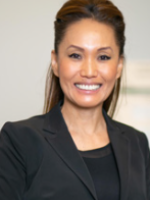
Sun Sunnie Chung, Ph.D.
Title: Professor of Practice
Office: Fenn Hall 222
Phone: (216) 687-4661
Email: s.chung@csuohio.edu
Research Interests: Big Data Analytics, Data Science, Text Analytics with Natural Language Processing (NLP), Question Answering System (AI), Machine Learning Based Intrusion Detection System, Cyber Security and Privacy of Cloud-Based Big Data and Deep Learning Systems, Optimization of Massively Parallel Big Data Processing Systems
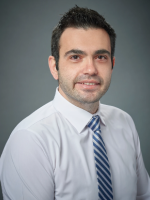
Apostolos Kalatzis, Ph.D.
Title: Assistant Professor
Office: Fenn Hall 223
Phone: (216) 687-5407
Email: a.kalatzis@csuohio.edu
Research Interests: Computational physiology, machine learning, robotics, and human factors.
The ADS Faculty in the Departments of Computer Science, Chemical and Biomedical Engineering, Chemistry, Math and Statistics, and Physics at CSU, and over 30 Medical Research Doctors from the Lerner Research Institute at the Cleveland Clinic conduct their world-recognized research with Substantial external funding and state-of-the-art equipment enable cutting-edge research in the area of Biomedical Data Science and Informatics to solve challenging problems in Biology, Medicine and Public Health by applying concepts and methods from AI, Data Analytics with Machine Learning in data science together.
Applied Data Science Faculty
Sun Sunnie Chung, Ph.D.
Title: Professor of Practice
Office: Fenn Hall 222
Phone: (216) 687-4661
Email: s.chung@csuohio.edu
Apostolos Kalatzis, Ph.D.
Title: Assistant Professor
Office: Fenn Hall 223
Phone: (216) 687-5407
Email: a.kalatzis@csuohio.edu
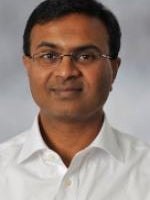
Sathish Kumar, Ph.D.
Title: Professor
Office: Fenn Hall 218
Phone: (216) 687-4862
Email: s.kumar13@csuohio.edu
Cleveland Clinic Faculty
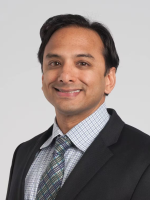
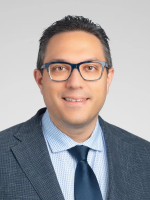
Dr. Shravan Kethireddy, M.D., FACP
Title: Associate Staff
Department: Critical Care Medicine
Location: Cleveland Clinic Hillcrest Medical Building Atrium
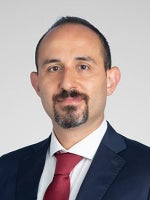
Dr. Demitre Serletis, M.D., Ph.D.
Title: Associate Staff Physician (Neurosurgeon-Scientist)
Department: Epilepsy Center
Location: Cleveland Clinic Main Campus
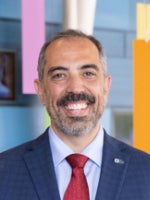
Murat Yildirim, Ph.D.
Title: Assistant Staff
Department: Neurosciences
Email: yildirm2@ccf.org
Location: Cleveland Clinic Main Campus
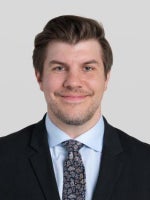
Faruk Örge, M.D.
Title: Director, Division of Pediatric Ophthalmology;
Dr. Boomer and Jill Burnstine Endowed Chair in Pediatric Ophthalmology
Department: Ophthalmology
Email: forge@akronchildrens.org
Location: Akron Children's Pediatric Ophthalmology & Optometry
Daniel Rotroff, Ph.D.
Title: Department Chairman
Director, Center for Quantitative Metabolic Research
Department: Quantitative Health Sciences
Email: rotrofd@ccf.org
Location: Cleveland Clinic Main Campus
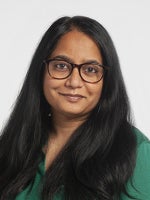
Sujata Patil, Ph.D.
Title: Associate Staff
Department: Quantitative Health Sciences
Email: patils2@ccf.org
Location: Cleveland Clinic Main Campus
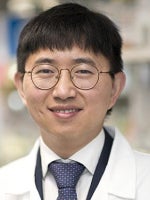
Feixiong Cheng, Ph.D.
Title: Staff; Director, Genome Center
Department: Genomic Medicine
Email: chengf@ccf.org
Location: Cleveland Clinic Main Campus
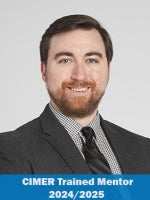
Daniel McGrail, Ph.D.
Title: Assistant Staff
Department: Immunotherapy & Precision Immuno-Oncology
Email: mcgraid@ccf.org
Location: Cleveland Clinic Main Campus
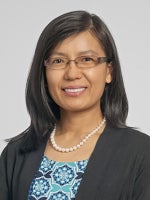
Xiaojuan Li, Ph.D.
Title: Staff; Director, Program for Advanced Musculoskeletal Imaging
Department: Biomedical Engineering
Email: lix6@ccf.org
Location: Cleveland Clinic Main Campus
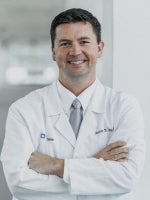
Justis Ehlers, M.D.
Title: Staff; Norman C. & Donna L. Harbert Endowed Chair for Ophthalmic Research;
Director, Tony & Leona Campane Center for Excellence in Image-Guided Surgery & Advanced Imaging Research
Department: Ophthalmic
Location: Cleveland Clinic Main Campus
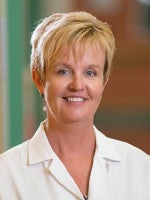
Suzy Comhair, Ph.D.
Title: Associate Staff; Director of BioRepository Core
Department: Inflammation & Immunity
Email: comhais@ccf.org
Location: Cleveland Clinic Main Campus
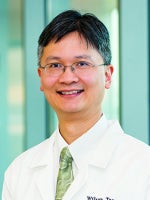
Wai Hong Wilson Tang, M.D.
Title: Staff, Cardiovascular Medicine
Department: Cardiovascular & Metabolic Sciences
Email: tangw@ccf.org
Location: Cleveland Clinic Main Campus
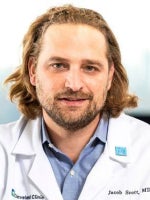
Jacob Scott, MD, Ph.D.
Title: Staff, Translational Hematology & Oncology Research; Radiation Oncology;
Associate Professor, School of Medicine, Case Western Reserve University;
Associate Director for Data Science, Case Comprehensive Cancer Center;
Adjunct Associate Professor, Department of Physics, Case Western Reserve University
Department: Translational Hematology & Oncology Research
Location: Cleveland Clinic Main Campus
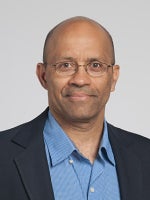
Suneel Apte, MBBS, Ph.D.
Title: Staff
Department: Biomedical Engineering
Email: aptes@ccf.org
Location: Cleveland Clinic Main Campus
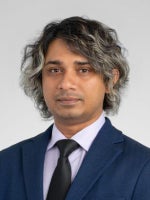
Saptarshi Biswas, Ph.D.
Title: Assistant Staff
Department: Ophthalmic Research
Email: biswass5@ccf.org
Location: Cleveland Clinic Main Campus
Abhinav Abhishek
Title: Ph.D. Student
Email: a.abhishek@vikes.csuohio.edu
Research Advisor: Shravan Kethireddy, M.D., FACP
Tomitopie Adeniyi
Title: Ph.D. Student
Email: t.adeniyi@vikes.csuohio.edu
Maryam Baizhigitova
Title: Ph.D. Student
Email: m.baizhigitova@vikes.csuohio.edu
Research Advisor: Xiaojuan Li, Ph.D.
Brian Chaffee
Title: Ph.D. Student
Email: b.chaffee@vikes.csuohio.edu
Emma Hamm
Title: Ph.D. Student
Email: e.l.hamm@vikes.csuohio.edu
Research Advisor: Suzy Comhair, Ph.D.
Christopher Hildenbrand
Title: Ph.D. Student
Email: c.hildenbrand@csuohio.edu
Research Advisors: Daniel Rotroff, Ph.D.; Sujata Patil, Ph.D.
Anna Jazayeri
Title: Ph.D. Student
Email: a.jazayeri@vikes.csuohio.edu
Research Advisor: Justin Ehlers, M.D.
Xiaohan Jiang
Title: Ph.D. Student
Email: x.jiang76@vikes.csuohio.edu
Chau Kim Loc
Title: Ph.D. Student
Email: k.chau@vikes.csuohio.edu
Alfredo Longo
Title: Full-Time Working Ph.D. Student
Email: a.longo@vikes.csuohio.edu
Ghazal Mashhadiagha
Title: Ph.D. Student
Email: g.mashhadiagha@vikes.csuohio.edu
Research Advisor: Shravan Kethireddy, M.D., FACP
Kareemat Melaiya
Title: Ph.D. Student
Email: k.melaiye@vikes.csuohio.edu
Research Advisor: Supported by NRT
Bryan Nova
Title: Ph.D. Student
Email: b.nova@vikes.csuohio.edu
Research Advisor: Wai Hong Wilson Tang, M.D.
Vish Pasumarthy
Title: Ph.D. Student; Full-Time Working Chief Technology Officer, University Hospitals
Email: s.pasumarthy1@vikes.csuohio.edu
Azita Ramezani
Title: Ph.D. Student
Email: a.ramezani@vikes.csuohio.edu
Research Advisor: Shravan Kethireddy, M.D., FACP
Sixto Ruiz
Title: Ph.D. Student
Email: s.m.ruiz@vikes.csuohio.edu
Tony Saina
Title: Ph.D. Student
Email: t.saina@vikes.csuohio.edu
Collin Simpson
Title: Ph.D. Student
Email: c.simpson31@vikes.csuohio.edu
Research Advisor: Shravan Kethireddy, M.D., FACP
Abay Suleimenov
Title: Ph.D. Student
Email: a.suleimenov@vikes.csuohio.edu
Research Advisors: Murat Yildirim, Ph.D., Cleveland Clinic; Faruk Örge, M.D., University Hospitals
Andrew Toth
Title: Ph.D. Student; Full-Time Working Lead Biostatistician, Cleveland Clinic
Email: a.j.toth2@csuohio.edu
Ersan Unlu
Title: Ph.D. Student
Email: e.unlu@vikes.csuohio.edu
Research Advisor: Murat Yildirim, Ph.D., Cleveland Clinic; Faruk Örge, M.D., University Hospitals
Sidney Wilson
Title: Ph.D. Student
Email: s.k.wilson1@vikes.csuohio.edu
Research Advisor: Daniel McGrail, Ph.D.
When a student is admitted, an interim advisor is assigned in his/her specialization to assist the student in completing a preliminary study plan. The interim advisor is usually the person in charge of the specialization area. Before sixteen credits of course work have been completed, the student must propose a dissertation advisor and begin plans for the dissertation.
The students are encouraged to form their dissertation committee as soon as possible, in consultation with their advisor, who normally chairs the committee. The functions of the student’s dissertation committee are: administer the candidacy exam and determine pass/fail; monitor the progress of the student’s research; administer the oral defense and determine pass/fail; and approve the dissertation.
The dissertation committee must include a minimum of five graduate faculty members, including the chair, and including at least one from outside of the Engineering College. Usually, an additional member is added when an off-campus, industrial advisor is involved in the dissertation work. This off-campus project advisor may be a member of the dissertation committee but does not have voting rights, unless he or she holds graduate faculty status. The Graduate Affairs Committee (GAC) of the College reviews the composition of the advisory committee and approves or recommends changes to attain a membership balance that is knowledgeable in all facets of the dissertation topic. Finally, an additional member may be selected by the Dean of the College of Graduate Studies. Any subsequent changes to the dissertation committee membership must also be approved by the GAC.
All students interested in Graduate Assistantships must meet and maintain the requirements specified by the College of Graduate Studies.
Research assistantships are provided through sponsored research activities; the number available at a given time is dependent on the research activity within the College. Interested students are encouraged to discuss the availability of assistantships and potential research projects with the program director, department chairs, and faculty as soon as possible.
Teaching assistantships are provided by individual departments to provide assistance with classroom and laboratory courses. Responsibilities can include conducting classroom recitation sessions, setting up laboratory experiments, tutoring students in class work, grading, monitoring tests, and related activities. For further information, students should contact the respective department chairs.
All graduate teaching assistants who are international students are required to pass an English Language Proficiency Examination, which is administered by the University Testing Center. Students are expected to work a maximum of twenty hours per week on their assistantship assignments unless fewer hours are specified under the terms of their contracts.
Learn more by requesting information or contacting a program staff member directly.
Program Director
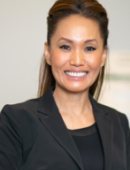
Sun Sunnie Chung, Ph.D.
Title: Professor of Practice
Office: Fenn Hall 222
Email: s.chung@csuohio.edu
Contact
Mailing Address
Cleveland State University, Department of Computer Science
2121 Euclid Ave., FH 212
Cleveland, Ohio 44115-2214
Campus Location
Fenn Hall Room 212
1960 East 24th Street
Phone: 216.687.4604
cs@csuohio.edu