Department of Chemical and Biomedical Engineering
Contact Info
Mailing Address
Chemical and Biomedical Engineering Department Washkewicz College of Engineering
Cleveland State University
2121 Euclid Ave., FH 455
Cleveland, Ohio 44115-2214
Campus Location
Fenn Hall Room 455
1960 East 24th Street
Phone: 216-687-2532
Fax: 216-686-9220
che@csuohio.edu
Contact
Kathleen Sessions, Administrative Coordinator
Phone: 216-687-4602
k.sessions@csuohio.edu
Annual Bell Lectureship
The Thomas Bell Lectureship in the Department of Chemical and Biomedical Engineering was established in 2017 in honor of former CSU chemical engineering faculty member, Dr. Donald J. Harvey, as a result of a generous donation from CSU alumnus Mr. Thomas Bell.
Ninth Annual Bell Lectureship 2026
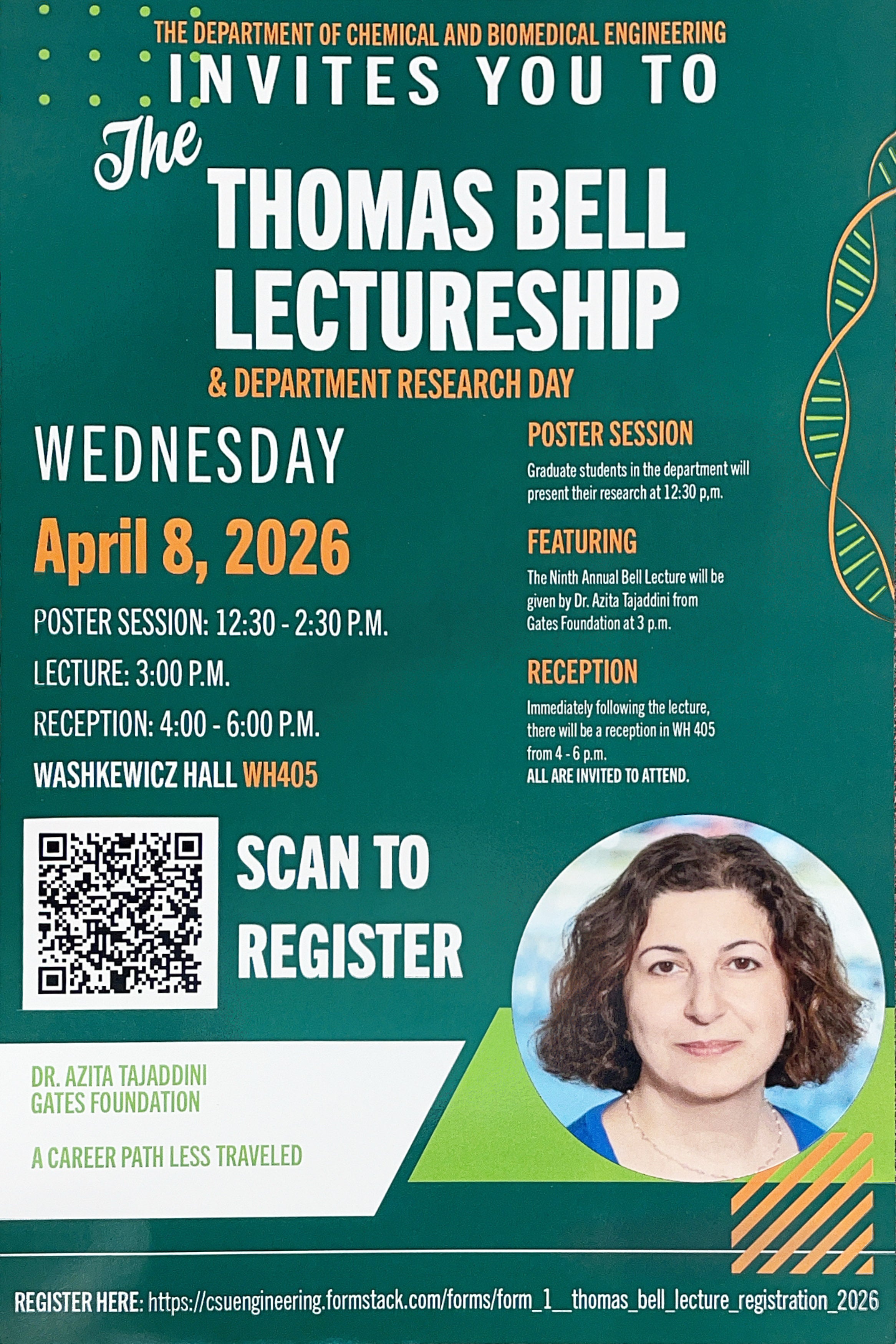
Recognizing Dr. Donald J. Harvey
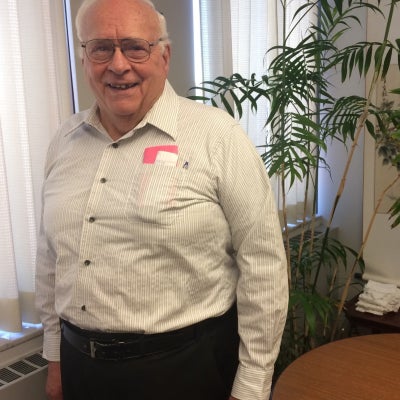
Dr. Donald J. Harvey received a BS in Chemical Engineering, MS in Mathematics, MS in Chemical Engineering, and a PhD in Chemical Engineering, all from the University of Michigan. Dr. Harvey joined Cleveland State University as an Assistant Professor in 1968. He taught nearly every course in the undergraduate chemical engineering curriculum (Material and Energy Balances, Thermodynamics, Transport I and II, Chemical Kinetics, Physical Chemistry, Unit Operations Lecture and Lab, Process Control, Numerical Methods) as well as graduate courses (Reactor Design, Engineering Thermodynamics, Dynamic Computer Simulation). While at CSU, Dr. Harvey developed a dynamic simulation of a quad-evaporative system for caustic production for the Diamond Shamrock Chemical Company, which then hired him away from CSU in 1977. In 1985, he moved from Diamond Shamrock to Lubrizol, where he worked on the simulation of kinetics and plant operations in their pilot plant. He stayed at Lubrizol until his retirement in 1996. He resides in Mentor, Ohio, with his wife of 60 years, Carol Harvey.
A Generous Donation from Thomas Bell
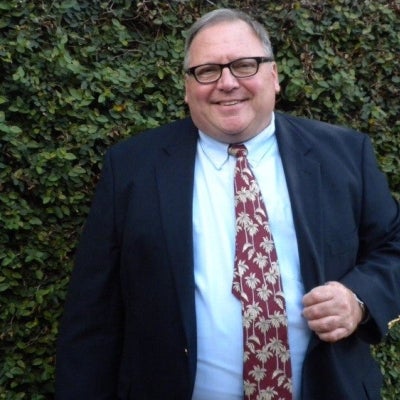
Thomas "Tom" Bell grew up in Lakewood, Ohio, graduating from Lakewood High School in 1968. After a brief stint working in the local steel industry, he attended Cleveland State University from 1969 to 1974, when he graduated with a Bachelor of Chemical Engineering. During his college days, he worked as a co-op engineer for the Linde Division of Union Carbide Corporation (now Praxair, soon to be merged with Linde AG). His early career focused on manufacturing positions in Coke byproducts, specialty chemicals, and polymers, working for US Steel and Air Products & Chemicals. In 1982, he graduated from CSU with an MBA while managing a manufacturing facility in Cleveland, and was transferred to Air Product's corporate offices into a commercial position. In 1986, he moved into the synthetic rubber industry with Polysar and later DSM Elastomers (now Arlanxeo). His last corporate position was with Kuraray Corporation, a producer of high performance styrenic block copolymers, as the commercial director for the Americas. Mr. Bell started his current business, S & T Group LLC, as a marketing services consultant and trader in the synthetic elastomers industry in 2009. He currently works with major and small polymer manufacturing and consuming entities in the development of new products, markets and customers.
Thomas Bell Lectureships Archive
Merging Humans and Machines: Innovation and Translation
Speaker: Dr. Xuanhe Zhao, Massachusetts Institute of Technology
When: April 23, 2025 @ 3:00 PM
Where: WH 405
Bio: Xuanhe Zhao is a Professor of Mechanical Engineering at MIT. The mission of Zhao Lab is merging humans and machines to address grand societal challenges in health and sustainability. Dr. Zhao is the co-inventor and pioneer of nascent research fields, including tough adhesive hydrogels, hard-magnetic soft robotics, and wearable ultrasound imaging. To translate technologies in these fields into societal impacts, he co-founded startup companies, including SanaHeal, Magnendo, and Sonologi.
Dr. Zhao is a Humboldt Research Awardee. He has been a Clarivate Highly Cited Researcher since 2018. Bioadhesive ultrasound, based on Zhao Lab’s work published in Science, was named one of TIME Magazine's Best Inventions of the year in 2022. SanaHeal Inc., based on Zhao Lab’s work published in Nature, was awarded the 2023 Nature Spinoff Prize. Over 15 patents from Zhao Lab have been licensed by companies and have contributed to FDA-approved and widely-used medical devices.
Soft Materials Innovation for Health and Sustainability
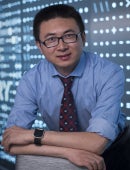
Speaker: Dr. Xuanhe Zhao, Massachusetts Institute of Technology
When: April 3, 2024 @ 3:00 PM
Where: WH 405
Bio: Xuanhe Zhao is a Professor of Mechanical Engineering at MIT. The mission of Zhao Lab is to advance science and technology between humans and machines to address grand societal challenges in health and sustainability. A major focus is the study and development of soft materials and systems. Dr. Zhao has won early career awards from NSF, ONR, ASME, SES, AVS, Adhesion Society, JAM, EML, and Materials Today. He is a Clarivate Highly Cited Researcher. Bioadhesive ultrasound, based on Zhao Lab’s work published in Science, was named one of TIME Magazine's Best Inventions of the year in 2022. SanaHeal Inc., based on Zhao Lab’s work published in Nature, was awarded the 2023 Nature Spinoff Prize. Over ten patents from Zhao Lab have been licensed by companies and have contributed to FDA-approved and widely-used medical devices.
Understanding Fluid Structure and Properties for Energy Storage Electrolytes: Deep Eutectic Solvents and Microemulsions
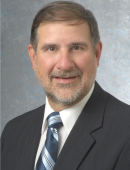
Speaker: Prof. Robert F. Savinell, Case Western Reserve University
When: April 4, 2023 @ 3:00 PM
Where: WH 405
Bio: Professor Robert F Savinell is a Distinguished University Professor, and George D. Dively Professor of Engineering at Case Western Reserve University. He is a proud chemical engineering alum of CSU and did his MS and PHD studies at the University of Pittsburgh. Dr. Savinell, prior to joining the faculty of CWRU in 1986, was a research engineer at Diamond Shamrock Corporation and then joined the faculty of the University of Akron. Professor Savinell was the director of the Ernest B. Yeager Center for Electrochemical Sciences at CWRU for ten years and served as Dean of Engineering at CWRU for seven years. He has been a visiting
professor at Yamanashi University in Japan, Denmark Technical University, and MIT. Professor Savinell has been engaged in electrochemical engineering research and development for over forty years. Savinell’s research is directed at fundamental science and mechanistic issues of electrochemical processes; and at electrochemical technology systems and device design, development, modeling and optimization. His research has addressed applications for energy conversion, energy storage, sensing, and electrochemical materials extraction and synthesis.
Professor Savinell is the Editor-in-Chief of the Journal of the Electrochemical Society. He is a Fellow of the Electrochemical Society, Fellow of the American Institute of Chemical Engineers, and Fellow of the International Society of Electrochemistry. In 2018 he was awarded by DOE an Emerging Frontiers Research Center grant and directs the EFRC on
Breakthrough Electrolytes on Energy Storage (BEES). In 2020 Savinell was awarded the Frank and Dorothy Humel Prize by CWRU for exceptional achievements in teaching, research, and scholarly service that have benefited the community, the nation, and the world. In 2022 Savinell was given the Vittorio De Nora Award by the Electrochemical Society for distinguished contributions in electrochemical engineering and technology.
Abstract: The increase of adding intermittent renewable energy sources like solar and wind to the electricity grid requires a commensurate need for large scale energy storage. Flow batteries are the most likely storage technology to meet this need because of its ability to decouple power load from energy storage capacity. Flow battery electrolytes are mostly based on aqueous systems with limited voltage window for energy storage redox couples, with some systems based on organic solvents that are voltile and often toxic. The DOE Emerging Frontiers Research Center (EFRC), a multi-institutional effort led by CWRU called Breakthrough Electrolytes of Energy Storage (BEES) is exploring structured fluid electrolyte systems, more specifically deep eutectic solvents and microemulsions. In this presentation, I will describe the motivation of this work, and report on some highlights of results and insights from studies with model systems during the first four years of this center activity. The EFRC BEES was recently renewed for another four years by DOE to extend this work towards new structures and systems.
Transient Electronics - From Materials Science to Medical Engineering
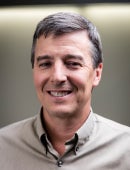
Speaker: Prof. John A. Rogers, Northwestern University
When: April 5, 2022 @ 3:00 PM
Where: WH 405
Bio: Professor John A. Rogers obtained BA and BS degrees in chemistry and in physics from the University of Texas, Austin, in 1989. From MIT, he received SM degrees in physics and in chemistry in 1992 and the PhD degree in physical chemistry in 1995. From 1995 to 1997, Rogers was a Junior Fellow in the Harvard University Society of Fellows. He joined Bell Laboratories as a Member of Technical Staff in the Condensed Matter Physics Research Department in 1997, and served as Director of this department from the end of 2000 to 2002. He then spent thirteen years on the faculty at University of Illinois, most recently as the Swanlund Chair Professor and Director of the Seitz Materials Research Laboratory. In the Fall of 2016, he joined Northwestern University as the Louis Simpson and Kimberly Querrey Professor of Materials Science and Engineering, Biomedical Engineering and Medicine, with affiliate appointments in Mechanical Engineering, Electrical and Computer Engineering and Chemistry, where he is also Director of the recently endowed Querrey-Simpson Institute for Bioelectronics.
His research has been recognized by many awards, including a MacArthur Fellowship (2009), the Lemelson-MIT Prize (2011), the Smithsonian Award for American Ingenuity in the Physical Sciences (2013), the MRS Medal (2018), the Benjamin Franklin Medal from the Franklin Institute (2019) and a Guggenheim Fellowship (2021). He is a member of the National Academy of Engineering, the National Academy of Sciences, the National Academy of Medicine, the National Academy of Inventors and the American Academy of Arts and Sciences.
Abstract: A remarkable feature of modern integrated circuit technology is its ability to operate in a stable fashion, with almost perfect reliability, without physical or chemical change. Recently developed classes of electronic materials create an opportunity to engineer the opposite outcome, in the form of ‘transient’ devices that dissolve, disintegrate, degrade or otherwise disappear at triggered times or with controlled rates. Water-soluble classes of transient electronic devices serve as the foundations for applications in zero-impact environmental monitors, 'green' consumer electronic gadgetry and bio-resorbable biomedical implants. This presentation describes the foundational concepts in materials science, electrical engineering and assembly processes for bio/ecoresorbable electronics in a variety of formats and with a range of functions. Wireless sensors of intracranial temperature, pressure and electrophysiology designed for monitoring recovery from a traumatic brain injury, stimulators configured for accelerating neuroregeneration of an injured peripheral nerve and temporary pacemakers for minimizing risks after a cardiac surgery provide some system level examples.
Speaker: Dr. Matteo Pasquali, Rice University
Biomimetic Colloidal Self-Assembly: Toward Artificial Muscles and Structural Color
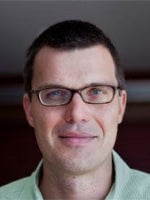
Speaker: Dr. Michael Solomon, University of Michigan
When: April 13, 2017 @ 3:00 PM
Where: Science Research Building 151.
Bio: Dr. Michael Solomon received his B.S. in chemical engineering and economics from the University of Wisconsin at Madison in 1990. Then from 1990-91, he was a Rotary Foundation International Fellow in economics at the Université d’Aix-Marseille II, Aix-en-Provence, France. He received his Ph.D. in chemical engineering from the University of California at Berkeley in 1996 and became a post-doctoral research fellow at the University of Melbourne, Australia. Solomon joined the University of Michigan as a Dow Corning Assistant Professor of Chemical Engineering in 1997 and is now the Professor of Chemical Engineering and Professor of Macromolecular Science and Engineering.
Dr. Solomon’s research interests are in the area of complex fluids – soft materials with properties intermediate between fluids and solids. His group has developed and applied 3D confocal microscopy methods to study the soft matter phenomena of self-assembly, gelation, and the biomechanics of bacterial biofilms. His work has also included discovery of a universal scaling for polymer scission in turbulence that identifies the limits that scission imposes on turbulent drag reduction. Other research interests have included the rheology of polymer nanocomposites, the microrheology of complex fluids and the microfluidic synthesis of anisotropic particles.
Dr. Mike Solomon was recently elected fellow of the American Association for the Advancement of Science (AAAS). He received this honor for his distinguished contributions to the field of colloid science, particularly for creating and understanding colloidal self-assemblies with new symmetries and new functions.
Contact Info
Mailing Address
Chemical and Biomedical Engineering Department Washkewicz College of Engineering
Cleveland State University
2121 Euclid Ave., FH 455
Cleveland, Ohio 44115-2214
Campus Location
Fenn Hall Room 455
1960 East 24th Street
Phone: 216-687-2532
Fax: 216-686-9220
che@csuohio.edu
Contact
Kathleen Sessions, Administrative Coordinator
Phone: 216-687-4602
k.sessions@csuohio.edu